Showing posts sorted by relevance for query Tony Gauci. Sort by date Show all posts

Thursday, 29 October 2020

Fourth anniversary of death of Tony Gauci

[The death of Tony Gauci, the Maltese shopkeeper whose "identification" of Abdelbaset Megrahi was crucial to his wrongful conviction, was announced on this date four years ago. What follows is a report in the Maltese newspaper The Times:]

Tony Gauci's death means mystery might remain unresolved

Tony Gauci, the Maltese man who determined the outcome of the Lockerbie trial, has died,Times of Malta is informed. 

Mr Gauci, who lived in Swieqi, is believed to have died of natural causes. 

He had pointed at Abdelbaset al-Megrahi as the man who had bought the clothes from his Sliema shop, which were said to have been wrapped around aircraft which killed 270 people over the Scottish town of Lockerbie in December 1988. 

This evidence tied together the prosecution's thesis, that the bomb loaded on to the doomed Pan Am flight at Heathrow Airport had first left from Malta before being transferred via Frankfurt. But serious doubts were raised about Mr Gauci’s testimony over the years.

Libyan national Al-Megrahi died in 2012 with the tag 'the Lockerbie bomber’ despite the fact that the Scottish Criminal Cases Review Commission had described Mr Gauci as an “unreliable” witness, putting the onus of the responsibility of the UK’s worst terrorist attack in doubt.

The SCCRC said the Crown prosecution suppressed from Megrahi’s defence team statements showing how much Gauci changed his mind about crucial details over the years.

Documents published later had revealed that the lead investigator in the Lockerbie bombing personally lobbied US authorities to pay Mr Gauci and his brother Paul at least $3 million for their part in securing the conviction of Al-Megrahi.

Mr Gauci never spoke publicly about the case and maintained the media silence that characterised his role in the whole affair. He was last approached for comment for an edition of Times Talk in November 2013.

Mr Gauci's death signals the end of a key witness to a case which continues being fought legally by relatives of victims who believe Mr Al-Megrahi was innocent. 

[A report in The National two days later contained the following:]

...in 2007, the Scottish Criminal Cases Review Commission (SCCRC) found six grounds where it was believed a miscarriage of justice may have occurred, paving the way for a second appeal.

The commission questioned evidence about the date on which the prosecution said the clothes were bought from Gauci’s shop.

The SCCRC also said evidence that cast doubt on Gauci’s identification of Megrahi had not been made available to the defence – in breach of rules designed to ensure a fair trial.

There was also evidence that four days before he identified Megrahi, Gauci had seen a picture of him in a magazine article about the bombing.

Megrahi dropped a second appeal in 2009 before being released due to his terminal prostate cancer.

In his last interview, he insisted he had “never seen” Gauci and had not bought clothes from him. (...)

Aamer Anwar, the Glasgow lawyer who acts for the Megrahi family, told The National: “Tony Gauci went to his grave knowing that he had always been accused of falsifying his evidence to convict al-Megrahi who until his dying breath maintained he was innocent.

“It is sad that we were unable to test his ‘unreliable identification’ evidence at appeal, however the Megrahi family remain determined to return to court one day to overturn the conviction of their father Abdelbaset al-Megrahi.”

George Thomson, who worked for Megrahi’s defence team, said the Libyan would look forward to meeting his accuser.

He told The Times of Malta: “When I last spoke to Baset on his deathbed he spoke of the day that he and Tony might meet in another place, where Tony would have to face him and answer for the lies he said against him.

“I personally hope that Tony is in a better place and that he is now at peace because he must have led a tortured life knowing that he had jailed an innocent man for money.”

[The role of Tony Gauci will feature prominently in the appeal by the Megrahi family that is due to commence in the High Court of Justiciary on 24 November 2020.]

Monday, 15 October 2012

The Gauci brothers and payment

[Five years ago today, an item in the following terms was posted on this blog under the heading Now there’s a surprise!:]

Lucy Adams in The Herald of 15 October has a story to the effect that Richard Marquise, the FBI special agent who led the US joint task force on Lockerbie (and author of the book Scotbom: Evidence and the Lockerbie Investigation, 2006, ISBN-13: 978-0875864495) remains of the view that Megrahi was responsible for the bombing of Pan Am 103 and regrets only that the will is lacking to bring other more senior Libyans to trial.

He confirms that there were discussions about about monetary payments to the Maltese shopkeeper, Tony Gauci, but is unable to say whether any money was in fact paid over.

See "Ex-FBI agent: no will to keep up Lockerbie investigation".

[What Mr Marquise is quoted as saying in the report in The Herald is this:]

He said he was unaware of any financial discussions between the CIA and the Gaucis but confirmed the US government ran a rewards programme for information at the time. "I know that when PanAm 103 went down, the State Department had a new programme called rewards for justice," he said.

It was well advertised in the Middle East, but the Scottish legal system has no mechanisms whatsoever for paying people and no comparative witness protection programme.

"We talked about it and we talked about the Gaucis and whether they needed to be protected," said Mr Marquise. "I think someone spoke to them in 1991 and said if you feel threatened we will relocate you, but as far as I am aware no-one offered them millions of dollars. Tony Gauci told someone that Australia would be the only place he might like to go, but he was happy in Malta and did not want to leave his pigeons so the subject was dropped. Instead extra security, including a panic button, was added to his shop."

[This should be compared with what we now know from Inspector Harry Bell’s diary of his dealings with the Gauci brothers, Tony and Paul.  The following is from a report in the Maltese newspaper, The Times:]

A document seen by the Scottish [Criminal Cases] Review Commission which reviewed the Lockerbie trial proceedings shows that star witness Tony Gauci had shown an interest in receiving money. (...)

The document was a memorandum dated February 21, 1991, titled Security of Witness Anthony Gauci, Malta, that consisted of a report sent by investigator Harry Bell to Supt Gilchrist just after Mr Gauci identified Mr Megrahi from a photo-spread six days earlier.

The memorandum was never disclosed by the prosecution during the trial.

Mr Bell discusses the possibility of Mr Gauci’s inclusion in a witness protection programme. The final paragraph, however, makes reference to a different matter: “During recent meetings with Tony he has expressed an interest in receiving money. It would appear that he is aware of the US reward monies which have been reported in the press.” (...)

But the review commission also had access to a confidential report dated June 10, 1999 by British police officers drawing up an assessment for the possible inclusion of Tony Gauci in a witness protection programme administered by Strathclyde Police.

In the report Mr Gauci is described as being “somewhat frustrated that he will not be compensated in any financial way for his contribution to the case”.

Mr Gauci is described in the report as a “humble man who leads a very simple life which is firmly built on a strong sense of honesty and decency”.

But the officers also interviewed Mr Gauci’s brother Paul, in connection with his inclusion in the programme.

The following passage in the report details their conclusions in this respect: “It is apparent from speaking to him for any length of time that he has a clear desire to gain financial benefit from the position he and his brother are in relative to the case. As a consequence he exaggerates his own importance as a witness and clearly inflates the fears that he and his brother have...  Although demanding, Paul Gauci remains an asset to the case but will continue to explore any means he can to identify where financial advantage can be gained.”

The report makes it clear that until then the Gaucis had not received any money.

But the commission established that some time after the conclusion of Mr Megrahi’s appeal, Tony and Paul Gauci were each paid sums of money under the Rewards or Justice programme administered by the US State Department.

Of particular note is an entry in Mr Bell’s diary for September 28, 1989: “He (Agent Murray of the FBI) had authority to arrange unlimited money for Tony Gauci and relocation is available. Murray states that he could arrange $10,000 immediately.”

When interviewed by the commission, Mr Bell was asked if Agent Murray had ever met Mr Gauci, to which he replied “I cannot say that he did not do so”.

However, the commission also noted that FBI Agent Hosinski had met with Mr Gauci alone on October 2, 1989 but Mr Bell said he would “seriously doubt that any offer of money was made to Tony during that meeting”.

Wednesday, 15 October 2014

The Gauci brothers and reward money

[On this date in 2007, an item headed Now, there's a surprise! was published on this blog.  It reads as follows:]

Lucy Adams in The Herald of 15 October has a story to the effect that Richard Marquise, the FBI special agent who led the US joint task force on Lockerbie (and author of the book Scotbom: Evidence and the Lockerbie Investigation, 2006, ISBN-13: 978-0875864495) remains of the view that Megrahi was responsible for the bombing of Pan Am 103 and regrets only that the will is lacking to bring other more senior Libyans to trial.

He confirms that there were discussions about about monetary payments to the Maltese shopkeeper, Tony Gauci, but is unable to say whether any money was in fact paid over.


[What Mr Marquise is quoted as saying in the report in The Herald is this:]

He said he was unaware of any financial discussions between the CIA and the Gaucis but confirmed the US government ran a rewards programme for information at the time. "I know that when PanAm 103 went down, the State Department had a new programme called rewards for justice," he said.

It was well advertised in the Middle East, but the Scottish legal system has no mechanisms whatsoever for paying people and no comparative witness protection programme.

"We talked about it and we talked about the Gaucis and whether they needed to be protected," said Mr Marquise. "I think someone spoke to them in 1991 and said if you feel threatened we will relocate you, but as far as I am aware no-one offered them millions of dollars. Tony Gauci told someone that Australia would be the only place he might like to go, but he was happy in Malta and did not want to leave his pigeons so the subject was dropped. Instead extra security, including a panic button, was added to his shop."

[This should be compared with what we now know from Inspector Harry Bell’s diary of his dealings with the Gauci brothers, Tony and Paul.  The following is from a report in the Maltese newspaper, The Times:]

A document seen by the Scottish [Criminal Cases] Review Commission which reviewed the Lockerbie trial proceedings shows that star witness Tony Gauci had shown an interest in receiving money. (...)

The document was a memorandum dated February 21, 1991, titled Security of Witness Anthony Gauci, Malta, that consisted of a report sent by investigator Harry Bell to Supt Gilchrist just after Mr Gauci identified Mr Megrahi from a photo-spread six days earlier.

The memorandum was never disclosed by the prosecution during the trial.

Mr Bell discusses the possibility of Mr Gauci’s inclusion in a witness protection programme. The final paragraph, however, makes reference to a different matter: “During recent meetings with Tony he has expressed an interest in receiving money. It would appear that he is aware of the US reward monies which have been reported in the press.” (...)

But the review commission also had access to a confidential report dated June 10, 1999 by British police officers drawing up an assessment for the possible inclusion of Tony Gauci in a witness protection programme administered by Strathclyde Police.

In the report Mr Gauci is described as being “somewhat frustrated that he will not be compensated in any financial way for his contribution to the case”.

Mr Gauci is described in the report as a “humble man who leads a very simple life which is firmly built on a strong sense of honesty and decency”.

But the officers also interviewed Mr Gauci’s brother Paul, in connection with his inclusion in the programme.

The following passage in the report details their conclusions in this respect: “It is apparent from speaking to him for any length of time that he has a clear desire to gain financial benefit from the position he and his brother are in relative to the case. As a consequence he exaggerates his own importance as a witness and clearly inflates the fears that he and his brother have...  Although demanding, Paul Gauci remains an asset to the case but will continue to explore any means he can to identify where financial advantage can be gained.”

The report makes it clear that until then the Gaucis had not received any money.

But the commission established that some time after the conclusion of Mr Megrahi’s appeal, Tony and Paul Gauci were each paid sums of money under the Rewards or Justice programme administered by the US State Department.

Of particular note is an entry in Mr Bell’s diary for September 28, 1989: “He (Agent Murray of the FBI) had authority to arrange unlimited money for Tony Gauci and relocation is available. Murray states that he could arrange $10,000 immediately.”

When interviewed by the commission, Mr Bell was asked if Agent Murray had ever met Mr Gauci, to which he replied “I cannot say that he did not do so”.

However, the commission also noted that FBI Agent Hosinski had met with Mr Gauci alone on October 2, 1989 but Mr Bell said he would “seriously doubt that any offer of money was made to Tony during that meeting”.

Saturday, 3 October 2009

Revealed: Scots link in $3m Lockerbie pay-out

[This is the headline over an article by Lucy Adams in today's edition of The Herald on the materials published yesterday on Abdelbaset Megrahi's website. It reads in part:]

Scottish police officers took an active role in seeking a $3m-plus reward for a key witness in the Lockerbie bombing trial and his brother, previously secret papers revealed yesterday.

The documents, which were never disclosed to defence lawyers working for Abdelbaset Ali Mohmed al Megrahi, also point to another potentially important eye witness whose evidence was never followed up by detectives.

Those revelations, published on Megrahi’s website, further undermine the credibility of Tony Gauci, the Crown’s main witness at Camp Zeist. (...)

It will fuel fears of a miscarriage of justice, and strengthen calls for an independent inquiry into Lockerbie.

A four-year investigation by the Scottish Criminal Cases Review Commission (SCCRC) found a number of documents which had not been shown to the defence. The non-disclosure would have been a key plank of Megrahi’s appeal, which he abandoned shortly before his release from Greenock Prison in August. (...)

The papers reveal that Tony Gauci received more than $2m after the trial and Paul, who never testified at Camp Zeist but “exercised considerable control over his brother”, received more than $1m. The family previously had financial problems.

Megrahi’s website summary [RB: I can find no trace of this summary on the website] states: “Tony Gauci and Paul Gauci had both expressed an interest in financial reward prior to giving evidence at trial. None of the documents in which references to the brothers’ financial interest or to the FBI offers of reward was disclosed and no mention of this was made to the defence. Many of the references . . . were in diaries kept by police officers. Parts of the diaries were missing and, most unusually, no police notebooks were kept. Letters written by the Scottish police to the US Department of Justice applying for a reward on behalf of the Gauci brothers were also recovered.”

Another section suggests Megrahi might not have bought clothes later found next to the suitcase carrying the Lockerbie bomb. A new witness called David Wright claims to have seen other men buying them in Tony Gauci’s shop in Malta.

In November 1989, Mr Wright called Dumfries and Galloway Police to say he had been in Mr Gauci’s shop when two Libyans bought similar clothing. He said Mr Gauci referred to them as “Libyan pigs”. But his statement was never followed up by police.

A Crown Office spokeswoman said yesterday: “All of these issues could have been raised during the course of the appeal which Mr Megrahi abandoned.”

[A further article by Lucy Adams in the same newspaper is headed "Is this man key to Lockerbie ...or was he just after the cash?" The following are extracts.]

Tony Gauci, a Maltese shopkeeper, became the Crown’s key witness in the conviction of Abdelbaset Ali Mohmed al Megrahi, and was the one man who linked the suspect to clothes found in the suitcase that harboured the bomb.

But new allegations published yesterday, which would have been tested in court if the appeal that began in April had gone ahead, have undermined both his credibility and reliability.

Papers on Megrahi’s website reveal that Gauci and his brother Paul were interested in financial reward from the start of the case, and that between them they received at least $3m (£1.88m) at the end of the trial.

Previously-secret police reports dating back to 1999 indicate “the frustration of Tony Gauci that he will not be compensated” and that “in respect of Paul Gauci, it is apparent from speaking to him for any length of time that he has a clear desire to gain financial benefit from the position he and his brother are in relative to the case.

“As a consequence he exaggerates his own importance as a witness and clearly inflates the fears he and his brother have.

“He is anxious to establish what advantage he can gain from the Scottish police.

“Although demanding, Paul Gauci remains an asset to the case but will continue to explore any means he can to identify where financial advantage can be gained.”

Offering witnesses financial remuneration is anathema to the Scottish system, and yet this information, uncovered by the investigation of the Scottish Criminal Cases Review Commission, was never disclosed to the defence.

Megrahi’s website states: “It is a matter of common sense, and it has long been recognised in Scots law, that the existence of a financial interest and/or the offer of rewards to a witness is of considerable importance in relation to the credibility of that witness.

“Depending upon the nature and degree of any such interest or reward, the law may exclude the evidence of the witness, or leave the effect of same on the witness to be weighed by the jury.” (...)

Megrahi’s website summary [RB: Again, I can find no trace of this summary] also states: “The documents also indicate that Tony Gauci had been visited by the Scottish police on more than 50 occasions – many, perhaps even the majority, of which were unrecorded.

“This information shows that the witness has significantly changed his position over time regarding the items sold.

“In addition there is a clear inference from the timing and context of these inconsistent statements that the witness has been influenced in his recollection by the police inquiries – either by being shown articles such as control samples or fragments or by discussion.”

Expert reports published for the first time on the website also question the validity of Mr Gauci’s identification of Megrahi.

Friday, 1 August 2014

Tony Gauci’s Lockerbie testimony

[This essay is based largely on research by its author, Kevin Bannon, for a thesis submitted in 2013 at Swansea University and later successfully defended for the award of the degree of PhD.  It is to be hoped that the thesis itself will soon be more widely available.]

The conviction of Abdelbaset Ali Mohmed al-Megrahi was based primarily on the police statements and court testimony of Tony Gauci, a Maltese shopkeeper who identified him as the man who bought a number of items from his clothing shop two weeks before the bombing. Identical items were found at the Lockerbie crash site and by their condition, forensic investigators established that they were packed in the same suitcase as the bomb when it exploded.

Police detectives first met Gauci in Malta in September 1989, nearly nine months after the bombing and in his initial statements he firmly recollected and reiterated that the purchaser of the clothes was 50 years old and six feet tall. He said that it was raining at the time of the purchase, prompting the man to buy an umbrella, and in interviews one year apart or more, he asserted that the purchase had taken place in late November 1988 and that the local Christmas decorations were not yet up.

Al-Megrahi was 36 at the time of the purchase and was measured at 5’8” at trial – though both his passports noted him as 170 cm tall – slightly under 5’7”. Records showed that the hanging of illuminated Christmas decorations outside Gauci’s shop was completed on 6 December when they were switched on. It is accepted that Al-Megrahi was not in Malta until 7 December, a day when local meteorological records revealed that it was almost certainly not raining. On the basis of this testimony - Gauci’s freshest recollections - the purchaser was evidently not al-Megrahi. In any event, Gauci was quite certain that the man had not purchased any ‘Slalom’ style shirts, one of which was to prove the most crucial item accompanying the explosive device.

However, during intermittent interviews over the following year and beyond, Tony Gauci modified his recollections and these modifications proved to be entirely in favour of the Crown narrative. Indeed, by the end of his court testimony in July 2000, virtually every aspect of his evidence had changed, and in several instances it had changed drastically. Now the rainfall had been reduced to a brief, light shower – hardly wetting the ground and falling just as the man was leaving the shop. Now Gauci was “sure” the Christmas decorations were up and lit when the Libyan buyer visited his shop. The purchaser visited “about a fortnight” before Christmas – eliminating a November purchase - and Gauci now stated that the man had bought two ‘Slalom’ shirts. In court Gauci said, cryptically, that the purchaser was “...below six feet...he wasn’t small. He was a normal stature.” The descriptions of other items purchased were revised, becoming more similar to those in the suspect suitcase: the colour of the Slalom shirt, the pattern on pyjamas, the motif on a baby’s romper suit, the colour and quantity of cardigans.

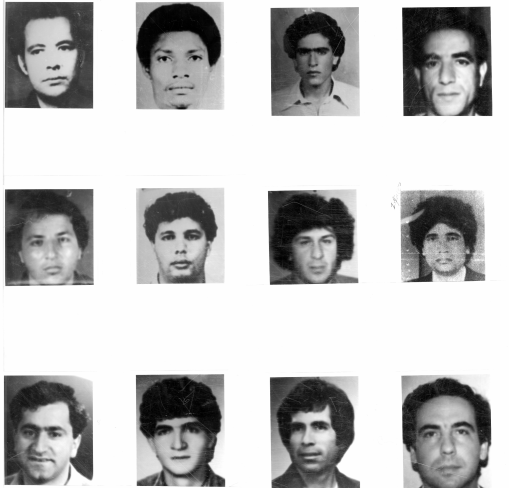
Police investigators sought Gauci’s help in identifying the purchaser from photographs. After several previous photo-identification sessions, on 15 February 1991 Gauci inspected a card with 12 photos. This session took place in the company of four police investigators, all of whom knew which picture was of the suspect and the pictures were placed far enough apart for them to be aware which one was being examined by the witness – improper conditions for such a photo-session. At first Gauci had said ‘they are all too young’ but he was advised to allow for the age discrepancy and told that the man he saw ‘could be 10-15 years older’ – a blatantly illicit prompt. Gauci stopped at al-Megrahi’s picture (‘no. 8’ middle row right) and declared “This is similar but is maybe 10-15 years younger” confirming the age discrepancy of Gauci’s early recollections of the purchaser. Police investigators and Camp Zeist judges alike regarded this vague statement as the clinching identification of al-Megrahi. In fact Gauci had twice identified a newspaper picture of Abu Talb as looking like the purchaser. Abu Talb was 15 years junior to al-Megrahi, is more slightly built and has a pronounced limp – obviously quite different to any of Gauci's other descriptions of the purchaser.

As the picture of al-Megrahi was said to be dull and grainy, DCI Harry Bell had the other pictures dulled-down so that the ‘suspect’ photo would not unduly stand out; but al-Megrahi’s picture remains of singularly poor quality by comparison. The thickness of the hair styles on some of the photos appear to have also been graphically enhanced with something like a felt pen. The middle pictures in the bottom row for example make their subjects look ridiculous as if they are wearing theatrical wigs. Presumably the purpose of this exercise was also to equalise the photographs but it gives away that these pictures are the ‘fillers’ and not the image of the suspect.


www.vetpath.co.uk lockerbie photoid.pdf (1).png


By the time Tony Gauci picked out al-Megrahi at an identification parade at Camp Zeist in April 1999, he had been exposed to pictures of him in the international media. A Maltese police officer present at the parade admitted in defence precognition that he himself would have been able to pick out al-Megrahi though never having met him - such had been the media coverage. Therefore neither this parade nor the photo-session had been properly controlled identification processes – quite the opposite.

In 1990 police investigators described Gauci as confused and ‘difficult to believe’ but this was not disclosed in court. Nor was it revealed that they had become concerned at the apparent suggestibility of Gauci, noting that he had been ‘trying to please’ them. The US Department of Justice fell over themselves to please Gauci, eventually paying him ‘in excess of $2m’ as a reward for his assistance with the investigation.


In court the details of a six feet tall, 50 year old purchaser in Gauci’s freshest recollections, were skipped over by Defence counsel and brushed aside in the judges’ deliberations. In their 80 page explanation of their verdict, the judges admitted to having a ‘major difficulty’ with the introduction of the bomb at Malta’s Luqa airport, which remains unexplained – as was its subsequent, automatic transit through Frankfurt airport and Heathrow. Nevertheless the judges cited Tony Gauci’s evidence as ‘accurate’ and ‘entirely reliable’ - one of the many absurdities to emanate from Camp Zeist.

Sunday, 2 October 2016

Crown’s breaches of duty of disclosure

[What follows is the text of a report published in The Independent on this date in 2009:]

The Libyan man convicted of the Lockerbie bombing today published more documents he claims prove his innocence.
Abdelbaset Ali Mohmed Al Megrahi insisted the move was not meant to add to the upset of the people "profoundly affected by what happened in Lockerbie".
But he added: "My only intention is for the truth to be made known."
Megrahi, who has terminal prostate cancer, was controversially freed from prison on compassionate grounds earlier this year.
He had been serving a life sentence at Greenock prison for the bombing of the Pan Am flight 103 in 1998, in which 270 people were killed.
Before his release, the bomber dropped his second appeal against that conviction.
His Scottish lawyers, Taylor and Kelly, said Megrahi remained ill in hospital in Tripoli, and that the documents published on the website www.megrahimystory.net related to his appeal.
In a statement Megrahi said: "I recognise that the Court of Criminal Appeal in Scotland is the only authority empowered to quash my conviction. In light of the abandonment of my appeal this cannot now happen."
However he added: "I continue to protest my innocence - how could I fail to do so?"
Megrahi said much of the material published today was "buttressed by the independent investigations of the Scottish Criminal Cases Review Commission".
It was the commission that referred Megrahi's case back to the courts for its second appeal.
Megrahi - who was convicted of the bombing in January 2001 at a Scottish court convened in the Netherlands - had mounted an unsuccessful appeal in 2002.
But in 2007 the Scottish Criminal Cases Review Commission, which investigates possible miscarriages of justice, sent his case for a subsequent appeal.
Today he said: "The commission found documents which they concluded ought to have been disclosed to my defence."
And he claimed this included a "record of interest in financial reward" by Tony Gauci, the Maltese shopkeeper who sold clothing found to have been in the suitcase that contained the bomb.
Megrahi also said the commission had seen documents which should have been given to his defence team at the trial.
He stated: "The commission concluded that the non-disclosure of these documents and other material may have affected the trial process and caused a miscarriage of justice."
A spokesman for the Scottish Government said Justice Secretary Kenny MacAskill made his decision to free Megrahi "based on the due process of Scots Law" and he "supports the conviction".
He added: "The Scottish Government has already released as much relevant information as possible, and have met with the SCCRC to look at what documentation relating to the appeal could be released by them."
The newly-published papers include claims that Tony Gauci was paid two million dollars (about £1.2m) by US authorities after the trial.
Much of the document published today relates to evidence which, Megrahi's lawyers say, was not produced at his trial.
When the Scottish Criminal Cases Review Commission sent Megrahi's case to the appeal court, it said doubt had been cast on some of the evidence which helped convict him, in particular evidence relating to his visit to Tony Gauci's shop in December 1988.
New evidence suggested the clothing had been bought before December 6, at a time when there was no evidence that Megrahi was in Malta, said the SCCRC.
And other evidence not available at the trial undermined Gauci's identification of him, it said.
Much of what is published today on the Megrahi website relates to Gauci's identification.
The legal documents by Megrahi's defence team say the SCCRC found material showing Mr Gauci was paid more than two million dollars by the US department of justice after the trial, and his brother Paul Gauci was paid one million dollars (about £600,000).
The SCCR also unearthed a statement made to police by David Wright, a friend of Tony Gauci, which had not been made available to the defence.
The statement from Mr Wright, who visited Tony Gauci, told of a purchase of clothing by two Libyans in October or November - but the statement was not investigated.
Other material published today also questions the reliability of Mr Gauci's identification of Megrahi.
The "missing evidence" on the identification of Megrahi was not put forward at his trial for a variety of reasons, according to the appeal papers published today by his lawyers.
They blamed both the prosecution for omitting some evidence from the trial - and the defence for not fully investigating the identification evidence.
Other arguments put forward in the documents relate to alleged inconsistencies in identification evidence, and to the possibility of Mr Gauci's recollection being tainted by "prejudicial" publicity.
The previously undisclosed evidence of David Wright was found by the SCCRC.
A friend of Mr Gauci and long-standing visitor to Malta, he called police in November 1989 after seeing TV coverage of Lockerbie which included footage of Mr Gauci's shop.
He told police he visited Mr Gauci in his shop in late October or November 1988, and saw two Libyans buy clothing.
The pair were smartly-dressed, had a lot of money, and bought several items of clothing.
Mr Gauci had referred to them as "Libyan pigs", and the descriptions given by Mr Wright did not resemble Megrahi.
But no further inquiries were made and Mr Wright's statement was not disclosed to the defence, the papers say.
The material showing that Mr Gauci asked for and received payment was also unearthed by the SCCRC, say the papers.
The commission found material showing that, at an early stage, he expressed an interest in receiving payment or compensation.
The material also "indicated" that US authorities offered to make substantial payments to him, that an application for reward money was made after the trial - and that Mr Gauci received "in excess of" 2 million dollars after the appeal, with his brother receiving 1 million dollars.
"The SCCRC states that, at some time after the appeal, the two witnesses were each paid sums of money under the Rewards for Justice programme administered by the US Department of Justice," said the papers.
And none of this had been disclosed to the defence, the papers say.
"The failure to disclose the information that reward monies have been discussed, that offers of rewards related to the witness have been discussed, and that substantial rewards have in fact been paid to the witness, is in breach of that duty to disclose."

Saturday, 31 October 2009

Malta to investigate evidence of key Lockerbie witness

[This is the headline over a report in today's edition of The Daily Telegraph. It reads in part:]

Malta is preparing to launch an investigation into the evidence one of the key trial witnesses who helped convict Abdelbasset al-Megrahi over the Lockerbie bombing.

Government officials want to look at the claims of Tony Gauci, the shopkeeper who identified the Libyan as the man responsible for placing explosives on Pan Am Flight 103.

Mr Gauci ran a clothes shop, in [Sliema], Malta in 1988, and claimed Megrahi purchased an incriminating piece of clothing found among the debris of the aircraft.

But he has long been dogged by accusations that he concocted the story to receive a multi-million payout from the US.

Megrahi, who was released from a Scottish prison on compassionate grounds in August, is running an internet campaign to prove his innocence.

The former Libyan secret agent has accused America of "buying evidence" by paying Mr Gauci $2 million (£1.2m) under the Rewards for Justice programme.

The international outcry over Megrahi's release has finally persuaded the Maltese authorities to consider an inquiry.

A Maltese legal official told The Daily Telegraph: "Tony Gauci is an area where we have to investigate more thoroughly and we are preparing for this.

"There was never enough proof, to be frank, on the circumstances of his evidence and there is pressure coming from many quarters on Malta to move to resolve the issue." (...)

A review of Megrahi's conviction by the Scottish Criminal Cases Review Commission in 2007 also revealed that Mr Gauci had been interviewed 17 times by Scottish and Maltese police but had made a series of "contradictory" statements.

Critics claim he manufactured his testimony after prompting by American agents who already had Megrahi in their sights and were desperate to get a conviction.

Relatives of the Scottish victims of the bombing have also voiced doubts about Megrahi's conviction. (...)

Campaigners for an investigation into the collection of evidence and subsequent trial of Megrahi before a Scottish court at Camp Zeist in the Netherlands said Mr Gauci was peripheral to efforts to find justice.

"I don't think he's of much use," said Robert Black, a Scottish QC who campaigns on Lockerbie. "He says what he thinks people want him to say." [RB: The reporter has completely misunderstood what I was saying. The trial judges' assessment of Gauci as credible and reliable was absolutely crucial to their conviction of Megrahi. If it can be demonstrated that Gauci was neither credible nor reliable, the foundation of that conviction completely disappears.]

Mr Black has co-operated with Dr Jim Swire, who's daughter Flora was one of 11 people who died in the village when Flight 103 exploded above Lockerbie in 1988 killing 270.

Both men are signatories to a letter to the United Nations General Assembly calling for an international inquiry into the tragedy.

"Malta is well placed to ask for this because its airport was stigmatised by the verdict," Mr Black said. "Malta has proved it could not be involved. It was in fact one of the very few places in the world that carried out physical reconciliation by baggage handlers at that time."

Dr Swire has threatened the government with legal action to overturn the Lockerbie verdict.

Mr Gauci now refuses to respond to questions about his controversial testimony. His last known residence was a well-guarded house shared with his brother in the Maltese suburb.

[What follows is from a report on the website of the Maltese newspaper, The Times:]

Malta has denied reports in the Daily Telegraph that it was to investigate the evidence of one of the key witnesses who helped convict the Lockerbie bomber.

According to the newspaper, the Maltese government wants to examine the claims of Tony Gauci, the shopkeeper who identified Abdelbaset Ali Mohmed Al Megrahi as the man responsible for placing explosives on Pan Am flight 103. (...)

The Telegraph quoted a Maltese legal official as saying: "Tony Gauci is an area we want to investigate more thoroughly and we are preparing for this."

But Home Affairs Minister Carmelo Mifsud Bonnici told timesofmalta.com the report was untrue.

[The MaltaMedia website report on the issue contains the following:]

The Government has categorically denied that any Government official said that the Maltese Government is preparing to look into the testimony that Maltese national Tony Gauci gave during the said trial. The Maltese Government is not prepared to do any such thing.

Since 1988 successive Maltese Governments have always maintained that the bomb which downed the Pan Am flight 103 had not departed from Malta and ample proof of this was produced. The Maltese Government hopes that this statement will put an end to this kind of speculation once and for all.

Friday, 1 September 2017

The centrepiece of the case against Megrahi

[On this date in 1989 the Maltese shopkeeper Tony Gauci was first interviewed by Scottish police in connection with Lockerbie. What follows is a section from Dr Kevin Bannon’s PhD thesis:]

The development of Tony Gauci’s statements from his first police interviews in September 1989 through to his testimony in court, reveal his recollections systematically developing in favour of the Crown narrative, in increasing contradiction of all his freshest recollections. This is transparently evident in the following compendium in which each subject of Gauci’s testimony in bold type is followed by actual or accepted facts summarised in italics, below which the essential statements are put chronologically:

1. Stature of the Purchaser:

The height and build of the purchaser. Al-Megrahi was 5’7” tall, average build.
1 September1989: ‘Six feet or more in height’ big chest, large head, well built.
26 September 1989: ‘around six feet or just under that in height’ and ‘broad built’.
11 July 2000 (Camp Zeist): ‘..below six feet’. ‘He wasn’t small. He was a normal stature’.

2. Purchase of clothing:

Slalom shirts. 2 Slalom shirts found at Lockerbie, one grey and one blue & white.
1 September 1989: No mention in statements of any shirts sold.
30 January 1990: ‘That man didn’t buy any shirts for sure’…‘I am sure I did not sell him a shirt’.
10 September 1990: I now remember that the man who bought the clothing also bought a beige ‘Slalom’ shirt and a blue and white striped shirt.’
11 July 2000 (Camp Zeist: asked ‘How many shirts did the Libyan buy?’): ‘Two’ shirts ‘Slalom, something Slalom’ one ‘blue checked’ and the other ‘greenish’. ‘It’s greenish and greyish. It’s more greyish…’

Pyjamas. 1 pair, striped, found at Lockerbie.
1 September 1989: ‘3 pair pyjamas’ (un-described).
11 July 2000: Did he buy any pairs of pyjamas? ‘Yes he did. He bought two pairs, striped’.

Cardigans. Fragments of 2 Cardigans found, one black and one brown.
1 September 1989: 1 cardigan (listed). Black and red colour.
11 July 2000: ‘..two pullovers.’ ‘They were cardigans.’ ‘One was blue, the other was a brownish colour’.

‘Babygro’ romper suit. Crash-site find had lamb’s head motif.
1 September 1989: Gauci said that the Babygro had a sheep’s face on the front.
13 September 1989: Gauci reiterated that the Babygro had a sheep’s head, even when shown the control sample with a lamb’s head, declaring that the sheep’s head design had been discontinued since he received it. Police subsequently established that the Babygro manufacturer had never produced a sheep’s head design.
4 October 1989: Gauci initially declared he was not sure about the sheep’s head design. Then said he was "fairly certain" that the Babygro sold to the purchaser had a lamb motif.

Payments for items sold. Gauci’s uncorroborated figures (in Maltese Pounds):
1 September 1989: Sale was £76.50, purchaser paid in £10 notes and received £4 change. Gauci later said the purchaser paid a total of £56 in cash.
19 September 1989: Second cardigan recollection; raises the sale to £88.
10 September 1990: Sale of 2 shirts raises Gauci’s recollected bill to £97 or £98.50.
11 July 2000: Purchaser gave him £80 for a total bill of £77.

3. Time and circumstances of purchase:

Rain. Meteorological evidence: 90% probability of no rain in Sliema on December 7.
1 September1989: ‘..it was raining’.
21 February 1990: ‘it had almost stopped raining, and it was just drops coming down’.
10 September 1990: ‘very little rain on the ground, no running water, just damp’.
11 July 2000, (Camp Zeist): ‘..it started dripping. Not very -- it was not raining heavily. It was simply -- it was simply dripping’.
11 July 2000: ‘It wasn't raining. It wasn't raining. It was just drizzling’.

Christmas lights/decorations. Decorations up and switched on 6 December 1988.
19 September 1989: ‘The decorations were not up when the man bought the clothes’.
10 September 1990: ‘There were no Christmas decorations up, as I have already said...’
11 July, 2000 (Camp Zeist): ‘..yes, there were Christmas lights. They were on already. I’m sure.

Date of purchase. Only December 7 fitted with al-Megrahi’s movements.
19 September 1989: ‘…I believe it…was at the end of November’.
8 October 1999 Precognition of Tony Gauci: ‘I remember it was the 29th of the month. I think it was November’. (Gauci recalled the date because he’d had a row with his girlfriend on that day).
11 July 2000 (Camp Zeist) : It must have been about a fortnight before Christmas. I don’t know whether it was a week or two weeks before Christmas’.

Second visit of Libyan customer. Al-Megrahi was not in Malta on September, 25 1989.
26 Sept 1989: Gauci said that the Libyan customer had returned to his shop the previous day (September 25) to buy dresses for a four-year-old child.
2 October 1989: (DCI Bell’s report of statement) Gauci said he was only 50% sure that the same Libyan had returned to the shop.
4 November 1991: Gauci said that the man who bought children’s dresses ‘really looked like’ [the purchaser]. Gauci seemed confused about the date of the visit.
18 March 1999 / 25 August 1999 (Precognition of Tony Gauci). Noted in DCI Bell’s words: ‘the man who bought the dresses looked like the purchaser but it was not the same person’.

Even minor details of Gauci’s testimony, including the collar sizes of shirts and the size of a jacket sold to the Libyan, drift consistently in favour of the Crown narrative.

It was not a secret that well before the Camp Zeist identification parade, Gauci had been exposed to newspaper articles featuring pictures of al-Megrahi including speculation about him as a suspect. In later SCCRC interviews, Gauci firstly admitted seeing the articles but could not recall specifics about them. Later he said that he could not recall seeing the articles at all, and later still he confirmed that he had not seen them - a transformation in the same, stepped fashion as most of his ‘recollections’ which at the very least, confirm his ineptitude as a witness.

Therefore, it is not merely the case (as has often been stated) that Gauci’s evidence was contradictory, but that in every aspect, it changed in favour of the Crown narrative, in some instances quite drastically. Gauci’s original, freshest recollections about the appearance of the Libyan purchaser and the time of his visit, would have, and should have, categorically eliminated al-Megrahi from suspicion.

Gauci’s testimony, the centrepiece of the case against al-Megrahi and, by implication, the principal Libyan connection to the crime, simply has no integrity whatsoever - nevertheless he was given a substantial financial reward for his latter evidence. These discrepancies render the entire case against al-Megrahi invalid. Of course this means that the considerable body of Camp Zeist testimony implicating al-Megrahi, such as the testimony of Majid Giaka, is false.