Showing posts sorted by date for query Tam Dalyell. Sort by relevance Show all posts

Sunday, 5 April 2026

Only truth, not revenge, allows us to heal and forgive

[This is part of the headline over an article by Dr Jim Swire published in today's edition of Scotland on Sunday. A longer version of the article reads as follows:]

Looking at the situation in the Middle East, we may never have a better opportunity to decry the use of brute force, public deception and material power as a route to bettering our future than we have at this moment. 

On 3rd July 1988 the USS Vincennes a cutting edge American missile cruiser equipped with a state of the art Aegis weapons control system, and commanded by (the late) Captain Will C Rogers III was in the Persian Gulf. American warships then were busy protecting international oil tanker traffic in the straits of Hormuz from Iranian attacks. History repeats itself.

Back in 1988 the Vincennes’ helicopter had reported coming under fire from Iranian speedboats, and though unscathed was ordered back to the Vincennes. The ship herself turned into Iranian waters in order to fire back at the Iranian speedboats, known as ‘Boghammers’, with which she then immediately engaged. At this time the ship’s radar picked up the trace of an aircraft climbing out of Bandar Abbas Airport (Iran). This was Iran Air Flight 655 an airliner with 290 people aboard. The airport supported both civil and military aircraft. Those interested to learn more might attempt to get access to a copy of STORM CENTER the USS Vincennes and Iran Air Flight 655 published by the (US) Naval Institute Press ISBN 1 755750 727 9, a personal account of tragedy and terrorism by Will and Sharon Rogers. It is a riveting account from the cutting edge by the Vincennes’ captain and his family.

Back on that 3rd of July 1988, the ship’s captain Will C Rogers III was led to misinterpret the radar trace of IR Flight 655 as being an attacking Iranian warplane, but it must be remembered this occurred in the tense circumstances of the fire from the Boghammers, and the restrictions placed on his ship’s duties from higher levels of the US navy. 

We humans do all make mistakes. 

Two of the ships missiles were fired and destroyed the airliner: the wreckage and the 290 bodies plunged into the waters of the Hormuz straits, killing all aboard; among cheers over the threat-resolution from the crew [and a from a media team who happened to be recording the amazing facilities of the ship and her technology that day.]

Captain Rogers remained in charge of his ship, and was later awarded the Legion of Merit decoration "for exceptionally meritorious conduct in the performance of outstanding service as commanding officer of USS Vincennes from April 1987 to May 1989”, though IR655 was downed in 1988. The award was given for his service as the Commanding Officer of Vincennes, specifically highlighting his tactical skills and leadership in the Persian Gulf, including engagements with Iranian surface craft. There was no mention there of flight IR655.

Iranian sources immediately publicly swore revenge upon “The Great Satan”, over the tragic loss of IR655 with all those people aboard. 

In November 1991, Scottish and American prosecutors simultaneously indicted Libyans Abdel Baset al-Megrahi and Al-Amin Khalifa Fhimah for the bombing of Pan Am Flight 103 over Lockerbie. Both were identified as members of the Libyan intelligence service. This was a sudden dramatic reversal of the previous years of work between the disaster in 1988 at Lockerbie and 1991, in which time intelligence services had concluded, as do we now, that the Lockerbie bombing was a revenge attack by Iran in return for the fate of IR 655. 

Within some ten days of this startling about turn [published simultaneously in the USA and by Scotland’s Lord Advocate], to blaming Libya, for the Lockerbie disaster, two Western hostages, one of whom happened to be the British Terry Waite an emissary of the UK’s then archbishop of Canterbury and both having been held by Hezbollah, an Iranian proxy in the Bekaa Valley in Lebanon, were released, others soon followed. 

Now that the Persian Gulf is again sporting US warships, with Iran’s leaders no doubt plotting how to manage the repercussions of being bombed this time by US and Israeli warplanes, and also with US marine groups on their way. We need to heed the words of German philosopher Georg Hegel: “The only thing that we learn from history is that we learn nothing from history.” 

For starters the subsequent bombing of Pan Am 103 over Lockerbie in December 1988 has been shown for our group ‘’UK Families-Flight 103’ by our own careful researches over more than 38 years, to have been the work of Iran, through the use of Ahmed Jibril’s PFLP-GC terrorist group in Damascus acting as mercenaries and financed - just as Hezbollah in the Bekaa has always been - by the Iranian Ayatollas. The PFLP-GC workshop in Damascus was where a set of cunning IED bombs intended to destroy aircraft in flight was made, under Jordanian Marwan Khreesat meanwhile the capture of a terrorist intermediary had confirmed to us [through incriminating documents found on his person by CIA assets], the passage of funds from Iran to Jibril’s group.

We had also obtained in early 1989 access to an illustrated warning sent in July 1988 to the UK Government, [among many others], by the German BKA police group under Herr Rainer Gobel. Containing colour photographs and descriptions of bombs recovered by them from members of Ahmed Jibril’s PFLP-GC Palestinian terrorist group now caught in the small German town of Neuss, convenient to Frankfurt airport.

Please study the story contained in our book LOCKERBIE: a father’s search for justice (ISBN 978 1 78027 920 6: Birlinn, Edinburgh, reprinted 2025) to understand how our search for the truth as to who had murdered our families was pressed forward over the decades, and how it came to fundamentally differ from the official account. It has had no driving force other than the need for us to know the truth about who really had murdered our family members, and to improve, if we could, the protection for other air travellers in the future. Many who have attempted to understand what is said to be the complex story of why Lockerbie happened, seem unaware of how it was shown that the one seemingly solid link between the bomb used at Lockerbie is nothing other than fake news. The link to Malta for the bomb simply did not exist. Its main support among the story tellers of the world was a tiny fingernail sized fragment of circuit board, named from the Zeist trial onwards as PT35b, and allegedly recovered from the crash debris at the site of the tragedy.

The first pointer we got as to the significance of this forensic element ‘PT35b’ found inside a Scottish police evidence bag and produced in court as proof of the concept of the bomb’s travel from Malta, was words from the USA attributed to Richard Marquise working on the tragedy for the FBI from the USA, who is alleged to have said that a court trial without this tiny piece of evidence would not have been possible.

This fragment now known as ‘PT35b’ was treated with great gravity by those attempting to defend the two accused Libyans. The fragment was submitted to electron microscopic and spectroscopic analysis. What that showed was that in the two surviving tracks on it’s small surface, the copper had been plated with pure tin.

At first this seemed part of the normal manufacturing processes used by a reputable Swiss firm ‘Turing’ who were supplying circuit boards to MEBO, who in turn had made the ‘MST13’ digital timers some of which were supplied by MEBO to the Libyans, and which the prosecution decided had been used for the Lockerbie bomb.

There were however two major problems: FIRST,During the intervening years between the disaster and the trial, the electronics industry had undergone a significant change. Those responsible at an international level for industrial and domestic waste disposal practices had become acutely aware of the risks to human health from the metal lead both in the domestic environment and when deposited in landfill. Rapidly it was decided that the metal lead must be removed from domestic use and in the platings on electronic circuit boards. With the cooperation of the EU, Japan and America in particular, it was agreed that all lead should be forbidden in the manufacture of electronic printed circuit boards. Meanwhile statements from Turing about their circuit board manufacture until after December 1988 confirmed that their output was universally made from boards plated in the standard electronic platings of the time, in which the blend of metals used always consisted of tin and lead.

Turing’s director Bonfadelli signed a sworn statement that his firm had been equipped solely for the application of tin/lead platings, before 1988 and so could not have made the board from which ‘PT35b’ would have had to have come. 

Second, the police evidence bag in which the fragment PT35b was found was unique in having had its label altered, and in such a way as to make it evident that debris within should be examined, rather than only the charred cloth also within, (which was readily shown to have originated from Malta). The Zeist court failed to have the details of who might have altered the label and what his/her motives might have been for doing so probed.

It was clear that neither the Scottish police nor any agent for the Crown Office were remotely likely to be responsible for originating ‘PT35b’, for we know that the investigating Scots police were in possession of pristine circuit boards given to them by MEBO, and that these were coated with a tin/lead alloy from which the lead could not be removed by the heat or blast of a Semtex explosion.

The likely origin for PT35b therefore seems to lie outwith the investigating team in Scotland, even though ‘PT35b’ was first revealed from a police evidence bag, and access to the police evidential bags seems to have been most generous for American agents from the FBI or intelligence agents also from the US. Without the ability to investigate the detailed behaviour of US agents in the investigation, we were made aware that a MEBO type timer had been acquired by the CIA from a site in Togo and that that evidence was passed from the CIA to the FBI, to an operative called James Thurman working in the FBI’s laboratories. This man broke the news to US media that he was the man who identified the CIA materials given to him which carried with them Libyan tainted details. He was lauded as man of the month, for establishing in many US minds the concept that this was a link to Libya. Unfortunately Mr James Thurman was soon removed from his position in the FBI labs after it came to light that internal investigations had shown persistent distortions by him of evidence in other FBI major investigations, his removal seems to have been the work of his superior ‘line manager’ Whitehurst. 

There can be no doubt that access to potentially evidential materials was gained by US agents right from the earliest hours following the disaster itself, and that this was found shocking by some who were honestly engaged in extensive searching of the disaster crash site. The late Labour MP Tam Dalyell had experienced the doubts of many who had been witnesses to the early evolution of the police investigations. We had hoped that people within the US would gather what evidence they could, and we never have wanted to disturb any ‘closure’ that American bereaved families might feel they had obtained for themselves.

Recent international political and military events, particularly some emanating from the USA have confirmed what we had already discovered the hard way: truth had been suborned into US foreign policy and there crushed underfoot along with the interests of those bereaved families in the UK who merely sought that truth. Inability to reach that truth is echoed in the subheading of the Washington Post newspaper: ‘democracy dies in darkness’.

Knowingly or not those currently assaulting Iran and her people from above will now find themselves embedded in asymmetrical warfare. The story of how Vincennes captain Will Rogers III’s wife Sharon came to escape miraculously from the shrapnel of a powerful pipe-bomb placed underneath the family’s van within the Continental USA itself in 1989 should leave no doubt about that prediction. American investigators were ‘unable to discover’ who had planted that pipe bomb.

Just so long as those in power in Iran, (Ayatollahs or not), remain in power and able to slake their lust for revenge, so long will the world be a needlessly dangerous place. The Iranian people on the other hand have tried to make their dissatisfaction with their regime known with the greatest bravery, losing around10,000 citizens' lives to the weapons of their own rulers recently.

It is a desperately sad aspect of humanity that the first visceral reaction that comes into so many of our human brains when we are attacked, or worse still those we love are killed, is to seek revenge. Yet it does not have to be so. We do not in our group ‘UK Families-Flight 103’ seek revenge against Iran for the Lockerbie atrocity. We have sought the truth, and not simply in ’Truth Social’ either. 

Knowledge of what the truth really is about the origins of the dreadful attack on Pan Am 103, has only reinforced the realisation for us that revenge is self-defeating and generates hatred and the lust for revenge. 

Revenge attempted by Iran against the family of the Captain of the Vincennes was amplified for many through the killing of 270 people at Lockerbie. Yet there still is another way; from accepting the truth of where blame lies could spring the roots of healing. If on the other hand, for reasons of State, of International Politics or simply from our own human nature we were to enlarge or repeat the words and acts of revenge, where then would be the route to forgiveness or healing? One cannot forget, but can forgive. Even for that, we need to know the truth.

Sometimes it is educational to remember days long past when young. As an eight year old boy, the writer living in the Scottish Island of Skye was aware of family links to Canada, whose current leader speaks so much free common sense nowadays. There, like so many in Scotland we had Canadian cousins, who unlike us in 1946 had freedom already to buy as much food as they required, and who sometimes were able to send to us food parcels to help fill the limitations of post World War 2 rationing. One day a large parcel from Canada arrived for us, inside were large packets of tea and white sugar, sent with love.

Seated around a dining room table in Skye our family were set to work, the younger ones with sharp eyes, but the adults also dedicated to the task of disentangling the contents of those bags, for they had burst and the sugar and the tea leaves so precious to us in those days had mixed in the jumbling of their travels. We were separating tea leaves from grains of sugar. It took all day, with the rain beating on the windows as though it disapproved of this affront to the limits of the post war rationing. Sometimes it is all too easy to think of people together as if all were to be tarred with the same brush and to think that all the parcel contents were good for would be to make cups of exceedingly sweet tea, or plates of sweet but tannin laden porridge. Dealing with Iran can be like failing to disentangle the sweet from the sour. It would be wise to think of Iranian people not as evil but like a mixed up parcel, just like we are here. Iran, after all is the remaining rootstock of one of the greatest civilisations the world has ever seen and its people of today may hold the seed-corn of a great future.

Not being Iranians ourselves we should not seek to distinguish between one Iranian and another, we are not this time best placed to tell the ‘sugar' from the 'tea leaves' and can only say that those who claim to run their Iranian 'theocracy’ have, over many years, held themselves free to attack and destroy the lives of others indiscriminately, whether or not those others appeared to have any connection other than just their nation or even just their common language with any acts of violence or hatred.

True, Iranians have emerged to find themselves governed by a ‘theocracy’ which they themselves may have summoned back from France, but which, given the reins of power, corrupted itself through the lust for even greater influence through militarism and terrorist-related bloody revenge.

Our Western bible does tell us stories of the life of Jesus, and at Easter we are there bidden to remember even stories of resurrection and glory. Let us though not forget, believers or not, how, in one such story when a woman was to be stoned to death for adultery, none of the accusing rabble of men could convincingly tell himself that he ‘at least’ was free of sin, and so they did not cast the first stone, but slunk away, and the woman lived. Elsewhere in that book we are told ‘judge not, that you be not judged, and forgive even those who have sinned grievously against us.

Both Iran and the UK whether Muslim, Christian, agnostic, or atheist can read or listen to the teachings which Jesus Christ left behind, namely that judgement of others should be the realm of God, not us, and that our privilege is to love one another.

By chance it so happens that only last week in England was enthroned a fresh Archbishop of Canterbury, for the first time ever in history a woman. How healing it would be if the people of Iran who have suffered so much already could somehow come to forgive their Western assailants. How hard that would be today with bombs and missiles being showered on them.

But meanwhile here in an act of amnesty towards our little group of Lockerbie victims, (‘UK Families - Flight 103’) now that the bonds between our own country and the USA have loosened considerably, and the truth has been so often crushed, perhaps the restrictions upon being allowed to know the contents of all the files that our own country keeps relevant to Lockerbie, but has kept out of public or media sight in Kew all these years, could be released for us to see. It was after all our loved ones who were killed, and time must have loosened both the need for security over the events of December 1988 and the need to protect any ongoing idea of prosecuting the guilty. We only seek to know the truth and after so many years surely the whole of the truth known, by our Government at least, about the atrocity over Lockerbie could be allowed out into the daylight? As the Washington Post heading proclaims ‘Democracy dies in Darkness'.

Saturday, 14 December 2024

Why haven't all the Lockerbie documents been published?

[This is the headline over a letter published today on the website of The Herald. It reads as follows:]

Regarding your recent coverage of the transfer of Lockerbie debris to the US for the Abu Agila Mas'ud trial next year, such activities will no doubt attract greater interest to the trial if that trial does occur in May 2025. 

The debris may remind some people of the horrors of the night of December 21, 1988 in the unsuspecting town, when that preventable disaster occurred in those dark and wind-rent skies high above the borders. Others will never forget.

Might it not have at least been more economical to transfer all UK Government written materials relating to their past handling of the origins of the disaster to the internet, so that the younger generation could form its own opinion about how the UK and US governments have behaved over this terrible tragedy over the past 36 years? Perhaps there would then be a little honest openness.

Your great paper sailed as close to the wind as anyone dared many years ago to try to expose some of the contents of some files concerning the Jordanian based bomb-maker Marwan Kreesat and his bomb-making prowesses, as he worked in Damascus and Neuss for the PFLP-GC terrorist group, even as that group’s funding (by Iran) was renewed: you dared to come under immediate threat of closure, did you not, in attempting to expose truth?

In our group’s 36th year in our search for the truth we believe that only the truth will still suffice for you at The Herald.

We could perhaps press for a complete disclosure of all Lockerbie-related files still held at Kew and elsewhere now that 36 years have passed. 

Which politicians would now have to blush at the audacity with which all that material was kept clear of Freedom of Information requests from the media, the public and from our group? Most are dead or disabled now. Alas that the redoubtable, loveable Scottish MP for Linlithgow, Tam Dalyell, was taken from us so many years ago.

Can significant material about terrorist groups and their links really have remained a genuine reason for secrecy all this time?

Dr Jim Swire, spokesman UK Families – Flight 103, Gloucestershire.

Saturday, 25 June 2022

Complicit in deceit, dishonesty and decadence

[What follows is the text of a review in Lobster (issue 84, 2022) by John Booth of The Lockerbie Bombing: A Father’s Search for Justice:]

Jim Swire prefaces his powerful and moving book with this arresting question: ‘How could initial faith in the establishment take thirty years to convert into distrust towards all those touched by that addictive drug we call power?’ 

This is much more than the anguished grief of the father of Flora, one of the 270 victims of the 1988 Pan AM Flight 103 disaster. The 23- year-old medical student had left Heathrow on December 21 to spend Christmas with her American boyfriend. She died when Clipper Maid of the Seas exploded over Lockerbie, killing all its 243 passengers, 16 crew and 11 residents of the small West Scotland town. 

It is the painful saga of a traumatized parent being denied access to the truth of his daughter’s death – of a humane community doctor forced to confront the ugly realities of realpolitik on both sides of the Atlantic. 

With his fellow author, Swire details Flora’s promising life and the cost to him and his family of his pursuit of the truth about its abrupt and brutal termination. They take us from his initial struggle to gain entrance to the temporary morgue where Flora’s body was taken, via the Lockerbie visit of Prime Minister Margaret Thatcher, through the decades-long fight to establish what really happened to the trial, imprisonment and death of Abdelbaset al-Megrahi, the Libyan found guilty of causing the death of his daughter. 

If Thatcher, who fails even to describe Lockerbie in her memoirs, had wanted a more doughty foe than Dr Swire she’d have been hard put to find one. A former Army officer and BBC television engineer who then retrained as a general practitioner, Flora’s father was just the kind of honourable, hard-working and patriotic figure Thatcher told us was the very best of British. 

The book details her refusal not only to meet him after Lockerbie but to deny an inquiry into what caused her and the grieving relatives from around the world to visit the crash scene. This isn’t so much the Iron Lady as the craven, lily-livered one, prepared to do anything to gratify the power of the United States ahead of the decent demand of her own citizens for truth and understanding. 

The story The Lockerbie Bombing tells is too long and complex to summarise in a short review. But the theme running through it is well expressed by Swire in its preface: 

"After many years running the British Empire we have evolved all sorts of subtle ways of concealing truth when it is inconvenient for government to admit failure. Supposedly even these subtle secrecies are limited by a ‘thirty-year rule’; but now we sail into a future where up to fifty Lockerbie documents are sequestered from public view well beyond that thirty-year limit with no explanation as to why. There seems no sign of conscience or even knowledge of right and wrong. My daughter and all those who died with her deserve better; it is as though their deaths did not matter." 

The author visited Libyan leader Muammar al-Gaddafi and spent time with the imprisoned al-Magrahi before he was released to die in Libya in 2012. He also closely observed his Zeist trial and is properly shocked by its verdict and the subsequent failure of his appeals against it. 

Along the way Swire observes the servile performances of Thatcher, Tony Blair, Gordon Brown, David Cameron, Jack Straw and David Miliband – none willing to challenge the determination of Washington to pin the blame for Lockerbie on Libya. He is no less critical of senior political and legal figures in Scotland while paying tribute to those north and south of the border who offered strong practical support, including veteran Labour MP Tam Dalyell and emeritus law professor Robert Black of Edinburgh University. 

The Lockerbie Bombing lacks an index but is well footnoted in support of a powerful narrative of the painful personal and political journey Swire has made. It is also the story of many in British public life paid to defend and uphold the safety and welfare of its citizens yet complicit in deceit, dishonesty and decadence.

Sunday, 26 December 2021

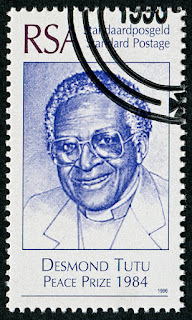
RIP Archbishop Desmond Tutu

[I am saddened to learn of the death today at the age of 90 of Archbishop Emeritus Desmond Tutu, who was a convinced and long-time supporter of the Justice for Megrahi campaign. What follows is an article posted today on Jim Swire and Peter Biddulph's Lockerbie Truth website:]

Today's sad news about the death of former South African Archbishop Desmond Tutu holds a feature common to much of the media in the UK and USA. 

The selective amnesia of certain media editors is clear: Effusively praise those issues in which Tutu agrees with your agenda, and ignore those in which he opposes.

And so it is, once again, with the campaign for an inquiry into the factors surrounding the 1988 Lockerbie bombing and subsequent trial.

On the 15th March 2015 we reported that a petition had been submitted to the Scottish Parliament by the Justice for Megrahi group of bereaved relatives. That petition was rapidly and publicly supported by prominent personalities around the world. The petition, even after six years, still runs current on the Scottish Parliament's agenda.


Among those signing in support of the petition was Archbishop Desmond Tutu. He proved to be a strong supporter of the imprisoned Baset al-Megrahi and a South African colleague Nelson Mandela.  Mandela's support for al-Megrahi, too, remains ignored by the main British and US media. 

On 15th March 2015 we published the following post: [Names in alphabetical order].

Campaign for the acquittal of Baset Al-Megrahi and an official inquiry into Lockerbie


A petition requesting that the Scottish authorities undertake a comprehensive inquiry into Lockerbie is supported and signed by the following world renowned personalities. All support the campaign for acquittal of Baset Al-Megrahi, who was in 2000 convicted for the murder of 270 people on Pan Am 103.


Kate Adie was chief news correspondent for the BBC, covering several war zones 
on risky assignments. Currently hosts the BBC Radio 4 programme 
From Our Own Correspondent.


Professor Noam Chomsky has spent most of his career at the Massachusetts 
Institute of Technology (MIT), where he is currently Professor Emeritus, 
and has authored over 100 books. In a 2005 poll was voted 
the "world's top public intellectual".


Tam Dalyell, former Member of British Parliament and Father of the House. 
An eminent speaker who throughout his career refused to be prevented 
from speaking the truth to powerful administrations.


Christine Grahame MSP, determined advocate of the Lockerbie campaign.


Ian Hislop, editor of Private Eye magazine.

Father Pat Keegans, Lockerbie Catholic parish priest at the time of the tragedy. 

 Mr Andrew Killgore, former US Ambassador to Qatar. Founder of Washington Report on Middle Eastern Affairs.


John Pilger, former war correspondent, now a campaigning journalist and film maker. 


Dr Jim Swire.


Sir Teddy Taylor, British Conservative Party politician, MP from 1964 to 1979. 


Desmond Tutu, former Anglican Archbishop of South Africa. 1984 Nobel Peace Prize.


Mr Terry Waite. Former envoy for the church of England, held captive from 1987 to 1991


THE FULL LIST OF SIGNATORIES
Ms Kate Adie (Former Chief News Correspondent for BBC News).
Mr John Ashton (Author of ‘Megrahi: You are my Jury’ and co-author of ‘Cover Up of Convenience’).
Mr David Benson (Actor/author of the play ‘Lockerbie: Unfinished Business’).
Mrs Jean Berkley (Mother of Alistair Berkley: victim of Pan Am 103).
Mr Peter Biddulph (Lockerbie tragedy researcher).
Mr Benedict Birnberg (Retired senior partner of Birnberg Peirce & Partners).
Professor Robert Black QC (‘Architect’ of the Kamp van Zeist Trial).
Mr Paul Bull (Close friend of Bill Cadman: killed on Pan Am 103).
Professor Noam Chomsky (Human rights, social and political commentator).
Mr Tam Dalyell (UK MP: 1962-2005. Father of the House: 2001-2005).
Mr Ian Ferguson (Co-author of ‘Cover Up of Convenience’).
Dr David Fieldhouse (Police surgeon present at the Pan Am 103 crash site).
Mr Robert Forrester (Secretary of Justice for Megrahi).
Ms Christine Grahame MSP (Member of the Scottish Parliament).
Mr Ian Hamilton QC (Advocate, author and former university rector).
Mr Ian Hislop (Editor of ‘Private Eye’).
Fr Pat Keegans (Lockerbie parish priest on 21st December 1988).
Ms A L Kennedy (Author).
Dr Morag Kerr (Secretary Depute of Justice for Megrahi).
Mr Andrew Killgore (Former US Ambassador to Qatar).
Mr Moses Kungu (Lockerbie councillor on the 21st of December 1988).
Mr Adam Larson (Editor and proprietor of ‘The Lockerbie Divide’).
Mr Aonghas MacNeacail (Poet and journalist).
Mr Eddie McDaid (Lockerbie commentator).
Mr Rik McHarg (Communications hub coordinator: Lockerbie crash sites).
Mr Iain McKie (Retired Superintendent of Police).
Mr Marcello Mega (Journalist covering the Lockerbie incident).
Ms Heather Mills (Reporter for ‘Private Eye’).
Rev’d John F Mosey (Father of Helga Mosey: victim of Pan Am 103).
Mr Len Murray (Retired solicitor).
Cardinal Keith O’Brien (Archbishop of St Andrews and Edinburgh and Cardinal in the Roman Catholic Church).
Mr Denis Phipps (Aviation security expert).
Mr John Pilger (Campaigning human rights journalist).
Mr Steven Raeburn (Editor of ‘The Firm’).
Dr Tessa Ransford OBE  (Poetry Practitioner and Adviser).
Mr James Robertson (Author).
Mr Kenneth Roy (Editor of ‘The Scottish Review’).
Dr David Stevenson (Retired medical specialist and Lockerbie commentator).
Dr Jim Swire (Father of Flora Swire: victim of Pan Am 103).
Sir Teddy Taylor (UK MP: 1964-2005. Former Shadow Secretary of State for Scotland).
Archbishop Desmond Tutu (Nobel Peace Prize Winner).
Mr Terry Waite CBE (Former envoy to the Archbishop of Canterbury and hostage negotiator).


Wednesday, 31 October 2018

Lockerbie: Three decades on but still a tragic lack of justice

[This is the headline over an article by Campbell Gunn published yesterday on the website of The Press and Journal. It reads in part:]

Only one person, Abdelbaset al Megrahi, has ever been convicted of taking part in the bombing. He was later released on compassionate grounds by the Scottish Government and has since died. Many involved in the investigation believe that even if he was involved it was in a minor role. The result is that there has been no justice for those killed and no closure for the relatives of the victims.

I have a personal interest in the case. On the night of the bombing, I was the newly-appointed chief reporter of a newspaper office in Edinburgh. When word came through that a plane had crashed in the Borders – that was the original belief – I rounded up two colleagues, and the three of us headed for the incident.

I have to confess that we used some subterfuge to get near the town, as the motorway was closed and there were long tail-backs on the approach roads. Even from a few miles distant, however, the smell of burning fuel was heavy in the air, and in the distance, we could see a glow in the sky. Police officers were obviously tied up in the town, and it was left to an AA man to direct traffic away from the motorway. I showed him my press card and lied to him that the police had told us to come this way. He waved us onto the motorway with a warning, “Drive south on the northbound carriageway. There shouldn’t be anything coming the other way, but put on full beam just in case…”

The result was that a few minutes later we were standing gazing into what looked like the bowels of hell, on the edge of the huge crater at the side of the motorway where the fuel-laden wings had landed, exploded and were still burning. The rest of the night was spent speaking to witnesses, attending press conferences in the town and sending regular updates to head office from a telephone box – no mobiles in those days, remember – before heading home at seven in the morning.

Lockerbie then became a major part of my journalistic life, as I followed the events of the subsequent years. I attended the press conference where the then Lord Advocate announced the charges against Megrahi and his co-accused Khalifa Fhimah, I was at Camp Zeist in Holland when the two accused flew in for trial, and I was at Justice Secretary Kenny MacAskill’s press conference when he announced he was to release Megrahi.

In between these events were a number of interesting asides. I knew the late MP Tam Dalyell, who campaigned long and vociferously that Megrahi was innocent. On one occasion, after there were reports in the American media containing details of documents relevant to the inquiry which were available under US freedom of information, but which we were unable to see in Scotland, I asked Tam if there was anyone he knew who could help. “Why don’t you call the US embassy and ask for John Doe,” he said. Even at this distance in time I’m reluctant to disclose the real name he gave me. I asked who this was. “His official title is First Secretary at the US embassy. His real job is head of the CIA in Europe. No-one knows more about the Lockerbie bombing investigation.”

I called the embassy, was put through to the man in question and he asked to see me before answering any questions. Next day I was in London facing the head of the CIA for Europe. He obviously wanted to check out that I was a real journalist and that my interest in Lockerbie was genuine. After a long chat he agreed to arrange for all these documents to be forwarded to me from the US State Department. They were the source of a number of stories in the subsequent weeks.

Additionally, it appears I was also put on a US Government list of “interested journalists”, as every time a documentary on Lockerbie was due to be screened on TV, I would receive a press release from Washington rebutting the claims the programme was expected to make.

When the Lockerbie media storm begins again in a few weeks, I’ll be able to reflect on my own coverage of the event and its consequences. Most importantly, I’ll reflect on the fact that not one of the main players in the attack, whether in Iran, Syria or Libya, has ever been brought to justice. Nor at this distance in time are they ever likely to face a criminal court in Scotland.

And that is a tragedy for the Scottish, UK and American justice systems.

Friday, 22 September 2017

Law and Politics in the Lockerbie Case

[This is the heading over a press release issued on this date in 2008 by the International Progress Organization. It reads in part:]

The UN-appointed international observer at the Lockerbie trial in the Netherlands, Dr Hans Koechler, revealed in an interview with the BBC's Reevel Alderson on 17 September  that the judges dealing with the new appeal of the only convicted suspect in the Lockerbie case, the Libyan citizen Abdelbasset Ali Mohmed Al Megrahi, have ruled that special counsel should be appointed for the Appellant in regard to the material covered by the Foreign Secretary's Public Interest Immunity (PII) certificate. This was communicated in a letter to a member of the House of Commons, dated 4 September 2008 and signed on behalf of the Minister of State Kim Howells. The respective paragraph at the end of the letter reads as follows:
The UK government has made clear its commitment to work closely with the Court to ensure that Mr. Megrahi receives a fair trial and that sensitive material is handled appropriately. To this end the court ruled on 19 August that special counsel should be appointed to assist the court and safeguard Mr Megrahi's interests in relation to this issue. Once appointed, the special counsel will be provided with a confidential summary of the submissions made by the Advocate General at the last hearing. The UK government supports this ruling in the interests of ensuring the trial is fair.
It is to be noted that the above letter was in reply to a letter the member of the House of Commons had written earlier (13 August 2008) to the Foreign Secretary, stating that he was "deeply concerned if the statement by Dr Koechler in the attached letter is correct and vital 'exculpatory material' is being withheld from Mr Al-Megrahi's defence team." The member of the House of Commons refers to a letter by Dr Koechler, dated 21 July 2008, to the Foreign Secretary. It is further to be noted that Dr Koechler received an almost identical letter of reply from the Foreign Office (dated 27 August) - with the exception of the three sentences marked in bold in the above quotation.
The UN-appointed international observer has visited Scotland from 11 to 19 September on a fact-finding mission aimed at assessing the reasons for the long delay of the new Lockerbie appeal. (In June 2007, after investigations that lasted several years, the Scottish Criminal Cases Review Commission had referred the convicted Libyan national's case back to the High Court of Justiciary.)
In the course of his visit, Dr Koechler has participated in consultations held on 15/16 September at Greshornish House on the Isle of Skye. The meeting was convened at the invitation of the Lockerbie Justice Group, headed by Robbie the Pict, and included Prof Robert Black, the "architect" of the Lockerbie trial in the Netherlands. Under the motto Quid nunc, Scotia? the participants were asked to consider questions in regard to the fairness and impartiality of the Lockerbie proceedings in the Netherlands and eventual new appeal proceedings in Scotland and to reflect on the lessons to be learned for the handling of any such case in the future.
Dr Koechler further held consultations with Mr Tam Dalyell, former member of the British Parliament and Father of the House of Commons; with Mr Alex Neil MSP and Mr Ian McKie, father of policewoman Shirley McKie, at the Scottish Parliament; and with members of the Lockerbie Justice Group on the Isle of Skye, in Edinburgh and Glasgow.  On 18 September he delivered a keynote speech on "The Lockerbie Trial and the Rule of Law" at the Law Awards of Scotland 2008, organized by The Firm magazine in association with Registers of Scotland at the Glasgow Hilton Hotel. In a reference to the Public Interest Immunity claimed by the UK government, Dr Koechler said:
Whether those in public office like it or not, the Lockerbie trial has become a test case for the criminal justice system of Scotland. At the same time, it has become an exemplary case on a global scale - its handling will demonstrate whether a domestic system of criminal justice can resist the dictates of international power politics or simply becomes dysfunctional as soon as "supreme state interests" interfere with the imperatives of justice. (...) The fairness of judicial proceedings is undoubtedly a supreme and permanent public interest. If the rule of law is to be upheld, the requirements of the administration of justice may have to take precedence over public interests of a secondary order - such as a state's momentary foreign policy considerations or commercial and trade interests. The internal stability and international legitimacy of a polity in the long term depend on whether it is able to ensure the supremacy of the law over considerations of power and convenience.
Dr Koechler's address was followed by enthusiastic applause from an audience of over 600 attendants representing Scotland's legal profession and was commented on by the subsequent keynote speaker, Sir Menzies Campbell CBE QC, former Leader of the United Kingdom's Liberal Democrats.
In an exclusive interview for the German-French TV channel ARTE, conducted in Edinburgh, and in all public meetings and consultations in Scotland Dr Koechler reiterated his call for a full public inquiry into the causes of the mid-air explosion of PanAm flight 103 over the Scottish town of Lockerbie and the handling of the case by the Scottish judiciary and the Scottish as well as the British executive.

Tuesday, 29 August 2017

Abu Nidal and Pan Am 103

[What follows is the text of an article published on the website of Al-Ahram Weekly on this date in 2002:]

Abu Nidal is reported to have said that his organisation was behind the Lockerbie bombing. The news emerged after a series of interviews with Atef Abu Bakr, a one-time aide to the terrorist mastermind, published by the Arabic-language Al-Hayat newspaper last week. Abu Nidal was found dead in Baghdad last week. In 1988, Pan Am Flight 103 was blown up over Lockerbie, Scotland, killing 270 people.

Abu Bakr is a former spokesman for the group and was one of Abu Nidal's closest aides between 1985 and 1989. He subsequently split with him over management of the organisation. "Abu Nidal said during an inner-circle meeting of the leadership of the Revolutionary Council, 'I will tell you something very important and serious, the reports which link the Lockerbie act to others are false reports. We are behind what happened,"' Abu Bakr was quoted by the newspaper as saying.

Abu Nidal's organisation has been blamed for many terrorist attacks in the 70s and 80s, in which hundreds were killed or wounded.

Abu Nidal set up his organisation's headquarters in the Libyan capital, Tripoli, in 1987. He was put under house arrest when the Libyan leader, Muammar Gaddafi, came under pressure to crack down on militants after the Lockerbie bombing.

Abu Bakr's statements are shocking because, if true, they jeopardise the verdict given by a Scottish court, in the Netherlands, which sentenced Libyan Abdel-Basset Al-Megrahi to life in prison in 2000. Another Libyan suspect, Lamine Khalifa [Fhimah], was acquitted. In March this year, a Scottish appeals court upheld the murder conviction of Al- Megrahi.

Commenting on the new revelations, Tam Dalyell, the longest serving member of Britain's parliament, called on the government to investigate Abu Bakr's allegations "as a matter of the utmost urgency". He said that "if these allegations are true they blow everything relating to Lockerbie out of the water, including the trial in Holland."

If Abu Bakr's statements prove to be true, they would also demonstrate the unfairness of sanctions imposed on Libya, in 1992, for its failure to hand over its two suspects. The United Nations, supported by the US and Britain, imposed sanctions on air travel and arms sales to Libya in 1992. The sanctions were suspended, but not lifted, in 1999, when Gaddafi handed over Al-Megrahi and Khalifa.

Abu Bakr's accounts were surprising but not new. After the bombing took place on 21 December 1988, the US State Department said that an unidentified person had telephoned the US Embassy in Helsinki, Finland, on 5 December, saying there would be a bombing attempt within two weeks against a Pan Am aircraft flying from Frankfurt to the United States. The caller claimed to belong to the Abu Nidal group, the State Department said at the time.

Also in 1995, Youssef Shaaban, a Palestinian member of Abu Nidal's group confessed responsibility for the bombing before judicial authorities in Lebanon, where he stood trial for the assassination of a Jordanian diplomat in Beirut.

However, Shaaban's words were not taken seriously. The investigating magistrates did not document his confession. The US and Britain reacted by saying that they had clear evidence against the Libyan suspects. Even the Libyan suspects' defence team never made use of Shaaban's statements or the State Department's Helsinki evidence.

British MP, Dalyell, has long argued that the Libyans were not behind the attack and that it was carried out by Abu Nidal.

Accordingly, relatives of the Lockerbie victims have renewed their calls on Friday for an independent inquiry into the attack.

Indeed, many of the relatives and legal observers who attended the trial, echoed their dissatisfaction with its outcome. They claim that many questions remain unanswered.

Jim Swire, a spokesman for the families of British victims, said the reports bolstered calls for an independent inquiry into the bombing, lapses in airport security and why Britain had not acted on warnings that an attack might occur.

Swire added that Palestinian militant Abu Nidal's possible involvement was "one more of the many questions which we feel absolutely demand an independent inquiry into Lockerbie". Swire, whose daughter Flora was killed in the bombing, has long demanded an independent inquiry into Lockerbie to uncover how much British intelligence services knew about the attacks.

"We certainly have part, or all, of at least eight intelligence warnings, all of which were received in good time, some of them incredibly detailed. I think we have a right to know why these didn't lead to any form of special protection for our loved ones," he said.

The same view was echoed by Hans Koechler, one of five UN observers who followed the trial as part of the deal with Libya. He believes that Abu Bakr's comments underline the urgency of calls he has made for an independent public inquiry into the entire Lockerbie case.

"The fact that Libya had hired a defence team that grossly neglected its professional duties and chose not to use most of the legal means available to Al-Megrahi's defence requires an explanation," Koechler said in a statement released in Vienna this week.

Koechler also criticised the legal proceedings and documented his remarks. He argued in his report that in the aftermath of the original verdict, the trial did not proceed fairly and was not conducted in an objective manner.

Ibrahim Legwell, former head of the Libyan consortium of jurists, acknowledged the poor performance of the defence team. However, he urged them not to ignore the new evidence. "Al- Megrahi's defence team should investigate claims [by any member of Abu Nidal's group]. If they find new evidence they should demand that the Scottish crown refer the case to the Scottish case review commission."

However, Al-Megrahi's lawyer, Eddie MacKechnie, has a different view. He said he was applying to the European Court of Human Rights to challenge Al-Megrahi's life sentence.

According to him, the allegations about Abu Nidal's involvement offered little new evidence for his client's legal battle.

"I'm not aware of there being any usable evidence arising from this second-hand confession, although I do know that Abu Nidal was thought to have links to the Lockerbie bombing right from the very beginning," MacKechnie said.